icon

Call Now

86-755-26508999

icon

Email

tilo@3nh.com

icon

Time

8:00 AM - 5:30 PM (GMT+8)

Message

Consultation

About Us

3nh specializes in high-precision color measurement instruments, including colorimeters, spectrophotometers, and haze meters, serving industries like textiles, plastics, and coatings. With innovative R&D and global reach, we deliver reliable solutions for color management and quality control, trusted by customers in over 80 countries.

Products

Products Frequently Ask Questions

The CCC is much like the CAC yet it frequently has advanced programmable lighting, sophisticated electronic control systems that allow for light source switching, and advanced visual testing.


Because of its unmatched precision, ease of use, adherence to global standards, and consistent long-term reliability.


A colorimeter sends light through a solution and measures the amount that is absorbed. It computes the absorbance by comparing the intensity of light before and after passing through. The greater the concentration of the color, the greater is the absorption of the light. It is also possible to quantify the color of the solution.


Standard models are available in a range of sizes, starting from small desktop units which are roughly the size of 60 x 40 x 40 cm, and extending to larger units which are about 120 x 60 x 80 cm based on what you need them for.


A colorimeter measures the amount of light and the wavelength that is absorbed by a solution. It is a sign that colored compounds are present and the level of their concentration. It is applied in the laboratory and industry to check the concentrations of chemicals, the color of products, and purity.


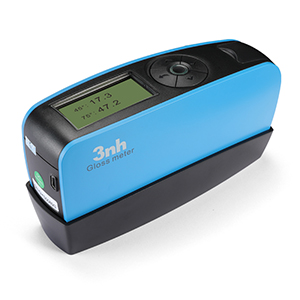
Gloss level is not given out in percentage but in gloss units (GU). In practice, however, 100 GU is considered 100 percent reflective. To contrast visually, the 20-40 GU is a low-gloss surface, and 85 or more is almost 100 percent mirror-like reflection.


Record the L*a*b values of the sample and the reference with a calibrated spectrophotometer or colorimeter. Compute the difference in the color by use of ΔE. The lower the Delta E, the more accurate the result. The difference in energy, ΔE < 1, is generally assumed to be invisible to the eye.


Color evaluation will change based on how a sample is viewed.  A 45° viewing angle to the source is recommended to reduce shading and achieve consistent comparison.

Smooth and uniform surfaces with a large amount of reflected light directly result in high gloss. Some of the factors are the smoothness of the surface, the type of paint that is being used, the thickness of the coating, and curing. The lesser the surface irregularities, the greater the gloss.


Our professional team will give you the best suggestion as long as you tell us what kind of test you need to do and the required specification.